What the Railroad Set Loose in Fort Worth, the Boomtown That Became Hell's Half Acre |
When the Texas and Pacific Railway pulled into Fort Worth on July 19, 1876, it did not just save a dying town. It turned loose a boomtown that the city would spend four decades trying to contain. The district that grew up along lower Rusk Street and the blocks around it became known as Hell's Half Acre, and its story is the complicated, colorful, and entirely honest answer to the question of what Fort Worth became after the railroad changed everything. |
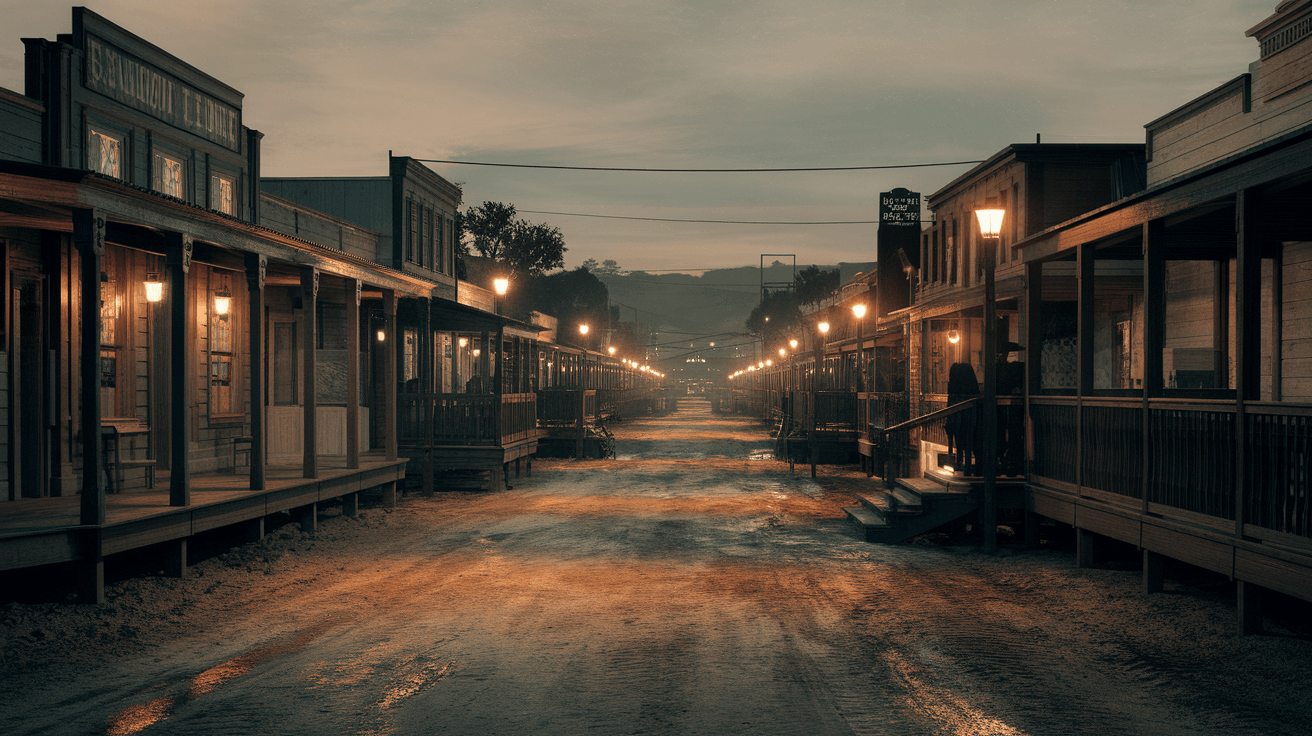
Fort Worth has always been honest about its past, and Hell's Half Acre is the part of that past most worth being honest about. The name first appeared in a local newspaper in 1874, before the railroad even arrived, when the area along Rusk Street was already attracting the kind of commerce that follows a cattle trail town on the edge of civilization. But it was the train that opened the floodgates.
By 1881, the Fort Worth Democrat reported that the Acre covered 2.5 acres of city real estate. At its peak, the district sprawled across four thoroughfares: Main, Rusk, Calhoun, and Jones Streets, running from Seventh Street down to Fifteenth Street, where Union Station's train depot marked the lower boundary. The geography was not accidental. The Acre sat where the cattle drovers arrived and where the working population of a fast-growing railroad town spent its money, its time, and occasionally its better judgment.
Longhair Jim, Luke Short, and Sam Bass
The people who defined Hell's Half Acre were as colorful as the reputation. Timothy Isaiah Courtright, known as Longhair Jim, was elected Fort Worth city marshal in 1876, the same year the train arrived, and he spent years navigating the uneasy relationship between civic authority and the Acre's commerce. On February 8, 1887, that navigation came to an end on Main Street. Gambler Luke Short and Courtright had a dispute that ended in a shootout. Courtright was killed. Short became, by the Acre's own accounting, the King of Fort Worth Gamblers. The Sam Bass gang used the Acre as a hideout during their years robbing trains and stagecoaches across the region.
Police statistics from the period recorded that 50 percent of violent crime in Fort Worth occurred within the Acre's boundaries. That figure tells you something about the concentration of activity in those few blocks, and it tells you something about how the rest of the city continued to function alongside it. Fort Worth was not consumed by the Acre. It coexisted with it, managed it, tolerated it, and eventually outlasted it.
How the Acre Finally Ended
The end came in stages. In the summer of 1917, Camp Bowie was established on the city's outskirts and martial law was imposed on the Acre, reining in the district in ways that peacetime law enforcement had never quite managed. Rusk Street was renamed Commerce Street that same year, a small act of civic rebranding that quietly erased one of the Acre's most recognizable addresses. By 1919, Reverend J. Frank Norris of First Baptist Church held a mock funeral parade to bury John Barleycorn, and the Acre passed into history alongside Prohibition's arrival.
What the Acre tells us about Fort Worth is not simply that the city had a rough stretch in its youth. Most boomtowns did. What the Acre tells us is that Fort Worth was the kind of place that could absorb that roughness, contain it, argue about it, and eventually move past it without pretending it never happened. The Sleeping Panther may be the city's most beloved symbol, but Hell's Half Acre is the proof that Cowtown earned its grit honestly.
The streets where the Acre roared are now part of downtown Fort Worth's cultural and entertainment core. Residents walking Main Street today are walking the same ground where Luke Short and Longhair Jim Courtright had their final disagreement, where the Sam Bass gang found cover, and where a boomtown played out its wildest chapter for four decades. The address on Commerce Street no longer carries the old name, but the ground remembers.
This is what July 19, 1876 set loose. And Fort Worth has never been embarrassed by it. Come by downtown Fort Worth and walk the blocks where Hell's Half Acre once stood, because the history of Cowtown lives right there under your feet. |
21 Comments
Join the conversation
Some folks still say Union Station is haunted. After reading this, I kinda get why.
The ground remembers. That line gave me goosebumps. Love learning about local legends.
Does anyone know if any tours talk about this stuff? Sounds like a good walk downtown.
I bet the police back then had their hands full every night. Respect to Longhair Jim, even if it ended rough for him.
It’s cool how those old wild days turned into the city’s best entertainment spots now.
Never realized just how concentrated all that action was in just 2.5 acres. That’s nuts.
Wish some of those old buildings were still standing. I love old western architecture.
Glad Fort Worth never swept this under the rug. Makes me proud we own our past.
My uncle always told me Main Street was haunted. Now I kinda believe him!
Prohibition really did change everything. That parade for John Barleycorn is a crazy image.
Anyone else think a movie about Luke Short and Longhair Jim would be awesome?
So much happened on just a few little streets. History hiding in plain sight.
Wonder how different downtown would look if the Acre never got reined in.
I'm glad the city kept some memory of Hell's Half Acre. Feels important to remember even if it was rough.
Reverend Norris must have had guts to pull that funeral parade thing. That’s wild.
My favorite kind of history, the messy kind. Never heard of Longhair Jim until now but what a character.
Didn’t know there was that much lawless stuff in Fort Worth. No wonder they called it Cowtown!
Never realized so much of downtown's history was tied to crime & gambling. Makes walking Main St feel a bit spookier now.
I hope we never forget this part of Fort Worth. It's gritty but it's ours.
Grew up hearing stories about the Sam Bass gang! My grandad swore his uncle met them once.
I always wondered why Commerce Street had that name. Cool to know it was Rusk before.