Pangburn's Millionaires: The Fort Worth Candy That Became a Texas Holiday Tradition |
From a Fort Worth drugstore in 1914 to chocolate-and-pecan gift boxes recognized across generations, Pangburn's Millionaires carry more than a century of Cowtown candy history. |
Some Christmas treats earn their place in a family without anybody making a big announcement about it. A box shows up on the coffee table. Somebody lifts the lid. Before long, a few pieces have disappeared, and someone is remembering who used to bring that same candy to the house every December.
For generations of Texans, Pangburn's Millionaires have been that kind of candy. Pecans, caramel, a little honey and milk chocolate come together in a generous piece of confectionery with a name that sounds mighty fancy. But the story behind it is rooted in Fort Worth, where an enterprising drugstore owner built a candy business more than a century ago.
It is a Fort Worth story worth remembering, particularly when the Christmas gift boxes and candy dishes come out.
It Started in a Fort Worth DrugstoreIn 1914, Hugh T. Pangburn introduced ice cream and candy to his Fort Worth drugstore business. University of Texas at Arlington Special Collections identifies that beginning as the origin of Pangburn's candy company, a business that would become closely associated with the city.
Drugstores once served a broader role in community life than filling prescriptions. Many had soda fountains and counters where neighbors could stop for a refreshment or a treat. Pangburn's business grew in that tradition. From 1920 through 1925, he also operated Pangburn's Cafeteria, serving lunches, candy, sodas, bakery goods and other items.
The name eventually reached far beyond Fort Worth. Historical accounts place Pangburn's chocolates in drugstores across Texas and other states. Yet the original company's identity remained firmly tied to Cowtown.
What Makes a Millionaire?At the center of the story is a deceptively simple combination: pecans, caramel, honey and milk chocolate.
UTA's historical account describes Texas pecans as part of the original Millionaires recipe, along with caramel, milk chocolate and a touch of honey. That balance matters. The pecans contribute a firm bite, the caramel provides a softer center, and the chocolate wraps everything together.
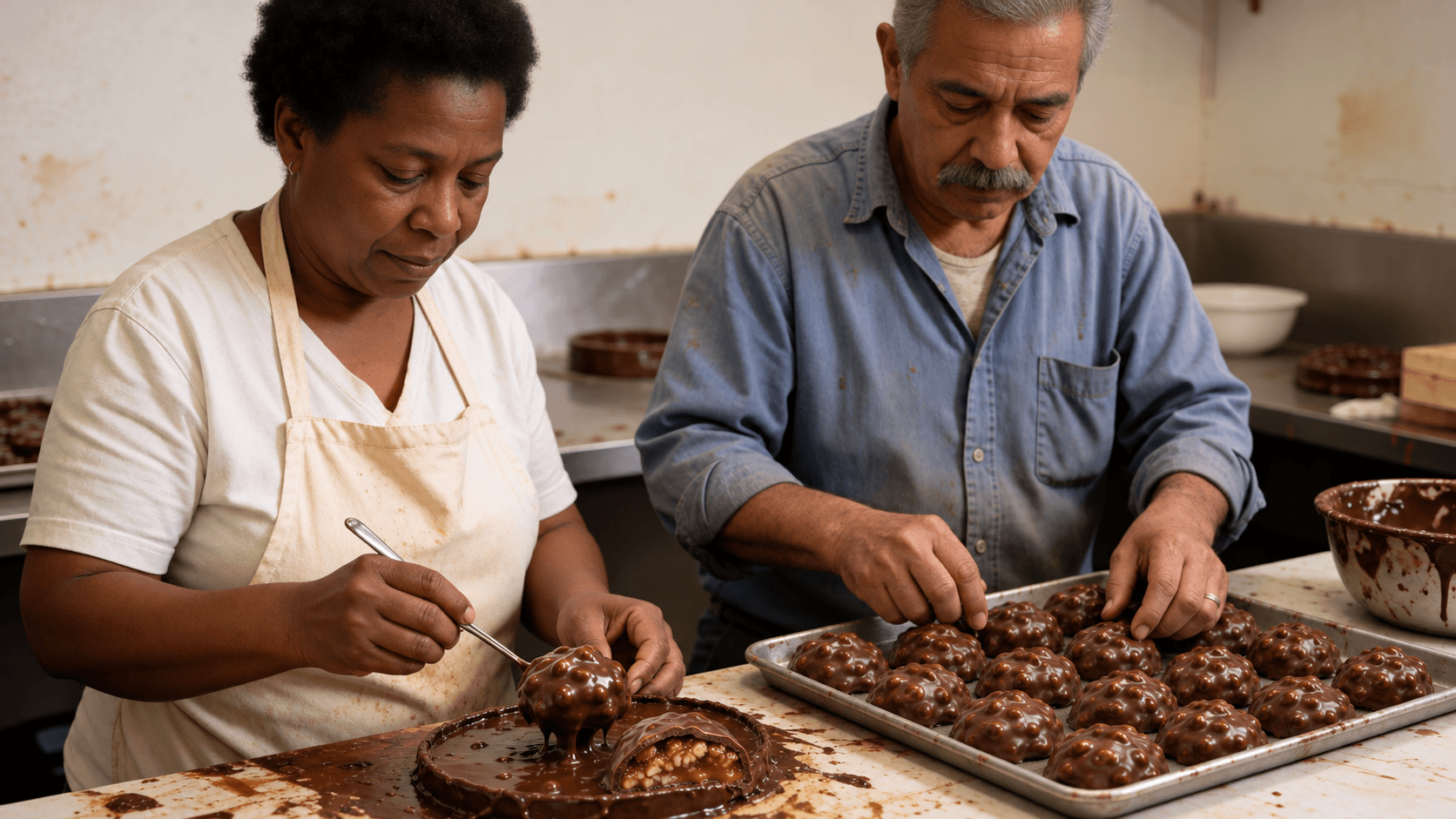
The candy was not simply another item pouring off an anonymous production line. UTA preserves a Fort Worth Star-Telegram photograph dated February 9, 1965, showing two Pangburn workers finishing dipped chocolates. The archive explains that experienced workers could dip more than 100 pieces in an hour, and that the company added a conveyor belt during the 1960s to increase production.
Even the small marks on the chocolates served a purpose. According to the archive, squiggles across their tops helped identify the fillings inside.
That is a little detail worth picturing during the holidays: people at work, finishing chocolates by hand, so somebody else could open a box and enjoy them.
The White Settlement Road ConnectionFort Worth has changed considerably since Pangburn began selling candy. The city's old manufacturing economy included bakeries, food processors and businesses that made products recognized across Texas.
Pangburn's was part of that story. A federal trade document from around 1960 identifies its principal place of business on West Seventh Street. Later records place the candy company at 2000 White Settlement Road, west of downtown.
The White Settlement Road address is more than a bit of local trivia. A February 1999 bankruptcy record identifies the Pangburn Candy Company at that location. The building also appears in accounts of Fort Worth candy manufacturer Sweet Shop USA, which had business connections to Pangburn's during the 1980s and later occupied the former plant.
For longtime Fort Worth residents, addresses like these connect familiar products to real workplaces and the people who made a living there. A piece of candy might travel across Texas in a gift box, but its history began in ordinary Fort Worth businesses, buildings and neighborhoods.
How Pangburn's Became Part of Christmas GivingMillionaires were not created exclusively for Christmas, at least not according to the evidence available today. Pangburn's chocolates also have a long history as gifts for Valentine's Day and other occasions.
But Christmas was certainly part of the company's sales tradition. Historical newspaper advertisements show retailers promoting Pangburn's chocolates for holiday giving. A December 1948 newspaper advertisement described Pangburn's candy as a Christmas gift, while later holiday advertising featured wrapped boxes and seasonal packaging.
The distinction matters. Those advertisements document the larger Pangburn's brand as part of Christmas shopping. They do not, by themselves, establish when individual families began treating Millionaires as a holiday tradition, or prove that Millionaires were marketed specifically for Christmas from the very beginning.
What we can say is that the familiar combination of pecans, caramel and chocolate fits naturally into the practice of giving candy during the holidays. Russell Stover continues to market Pangburn's Millionaires in gift boxes and describes larger packages as suitable for sharing and seasonal gatherings.
A gift does not have to be elaborate to carry a memory. Sometimes the same box of candy, brought year after year, becomes the tradition.
The Original Fort Worth Company ClosesThe history also includes a difficult turn.
Pangburn Candy Company filed for bankruptcy in February 1999. The company closed, and the following month Whitman's Candies, an affiliate of Russell Stover, acquired Pangburn's trademarks. At the time, the companies announced plans to manufacture Pangburn's products at a new Russell Stover plant in Corsicana.
The original Fort Worth company and today's Pangburn's brand are therefore not the same operating business. That difference is important when telling the story. Fort Worth was where the candy began, and the brand name survived after its original manufacturing company ended.
Russell Stover later became part of Lindt & Sprüngli in 2014. Pangburn's remains in the Russell Stover product family, with Millionaires marketed as a Texas-born confection featuring pecans, caramel and milk chocolate.
What Remains of a Fort Worth Candy TraditionToday, someone can recognize the Pangburn's name without knowing much about Hugh Pangburn, the former plant on White Settlement Road or the workers who once dipped chocolates in Fort Worth.
That is one reason the local history deserves to be told. A familiar candy is also a reminder of the businesses that helped define Fort Worth before today's towers, entertainment districts and new developments.
There is a wider Texas connection, too. Pecans have long been part of this state's food identity, whether they end up in a Thanksgiving pie, a holiday praline or a chocolate-covered piece of caramel candy. Pangburn's Millionaires carry that ingredient into a confection with a particularly strong Fort Worth lineage.
For readers who remember Millionaires from family Christmas gatherings, the candy may bring back a very specific person, a certain house or the sound of somebody opening a box. Those memories deserve room alongside the factory dates and company records, even though no one family's custom can stand in as proof of everybody else's.
Fort Worth does not need to borrow another city's traditions to tell a good Christmas story. Sometimes the history is already sitting in the candy dish.
Quick Facts
Sources and Further Reading
|
0 Comments
Join the conversation
Be the first to comment
Share your thoughts above.